What Are Snow Sticks?
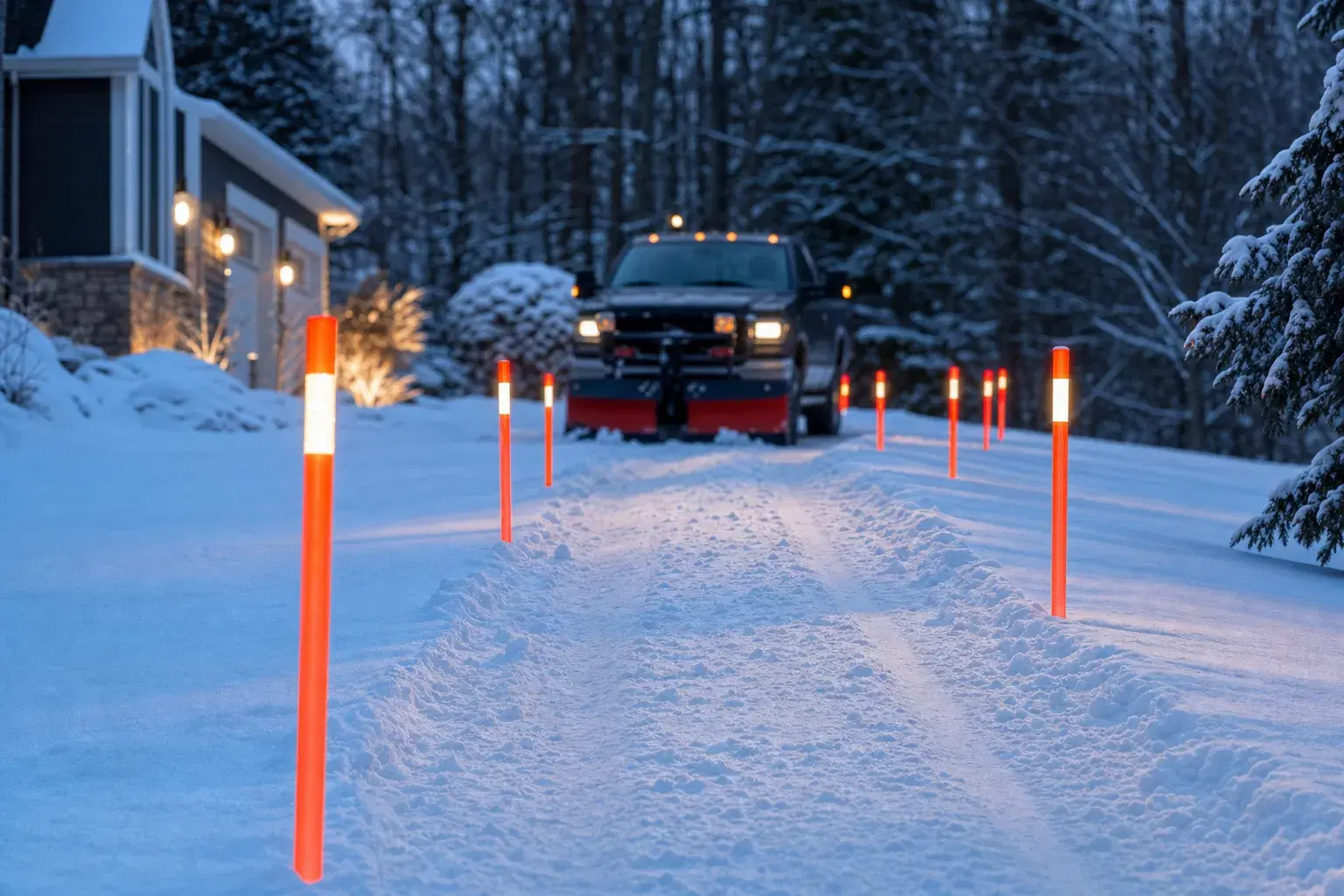
Snow sticks — also called driveway markers, snow poles, or plow markers — are those bright fiberglass or plastic stakes you see lining driveways and walkways once winter arrives. While they might seem like a minor detail, they play a critical role in protecting your property during snow removal.
When a heavy snowfall buries your driveway under 8+ inches of white powder, it becomes nearly impossible for plow operators to see where the pavement ends and your lawn begins. Without visual guides, plows can easily tear up grass, damage flower beds, clip mailboxes, or crack landscape edging.
Types of Snow Sticks
Fiberglass Stakes: The most popular option. They're flexible enough to bend if clipped by a plow without breaking, and they snap back to position. Available in bright orange, green, or reflective varieties.
Wooden Stakes: A budget option, but they splinter and break easily. Not recommended for areas with heavy plow traffic.
Reflective Driveway Markers: These have reflective tape or caps that make them visible at night — crucial for early-morning plow runs before dawn.
Spring-Loaded Markers: Premium option that automatically rebounds if struck. Ideal for commercial properties or busy driveways.
Where to Place Snow Sticks
Proper placement is just as important as choosing the right markers:
- Both sides of the driveway — Every 6–8 feet along the length, especially at curves.
- Driveway entrance/apron — Mark where your driveway meets the road clearly.
- Along walkways — Help your plow or shovel crew know where paths are located.
- Around obstacles — Fire hydrants, well caps, septic access points, low walls, or landscape features.
- Mailbox perimeter — A common casualty of winter plowing.
When to Install Them
The best time to install snow sticks is late fall, before the first freeze. Once the ground freezes, driving stakes into the soil becomes much harder. Aim for late October to mid-November depending on your region.
Want your driveway plowed perfectly without damage to your lawn edges? Get a quote and we'll make sure your property is protected all season.
Get Your Free QuoteNo obligation • Quick response within 24 hours
Pro Tips From Plow Operators
As people who plow driveways for a living, here are a few things we wish every homeowner knew about snow sticks:
- Taller is better. After a heavy snowfall, short markers can get buried. We recommend 48-inch stakes minimum.
- Reflective tops matter. Most plowing happens in low-light conditions. Reflective markers can be the difference between a perfect plow job and a damaged lawn edge.
- Replace them annually. Fiberglass stakes degrade in UV light over time. A fresh set each fall ensures they're visible and strong.
- Don't rely on memory. Even if you've lived in your home for 20 years, your plow operator hasn't. Mark everything clearly.
Cost of Snow Sticks vs. Cost of Damage
A pack of 50 fiberglass driveway markers costs around $30–50. Repairing a torn-up lawn edge? That can easily run $200–500 depending on the damage. New landscape edging or a replaced mailbox? Even more.
Snow sticks are one of the most cost-effective investments you can make for winter property protection. Think of them as cheap insurance for your landscaping.
Summary
Snow sticks are a small purchase with a big return. They protect your property, help your plow crew do their best work, and save you from expensive spring repairs. Install them early, choose quality reflective stakes, and your property will come through winter looking great.