
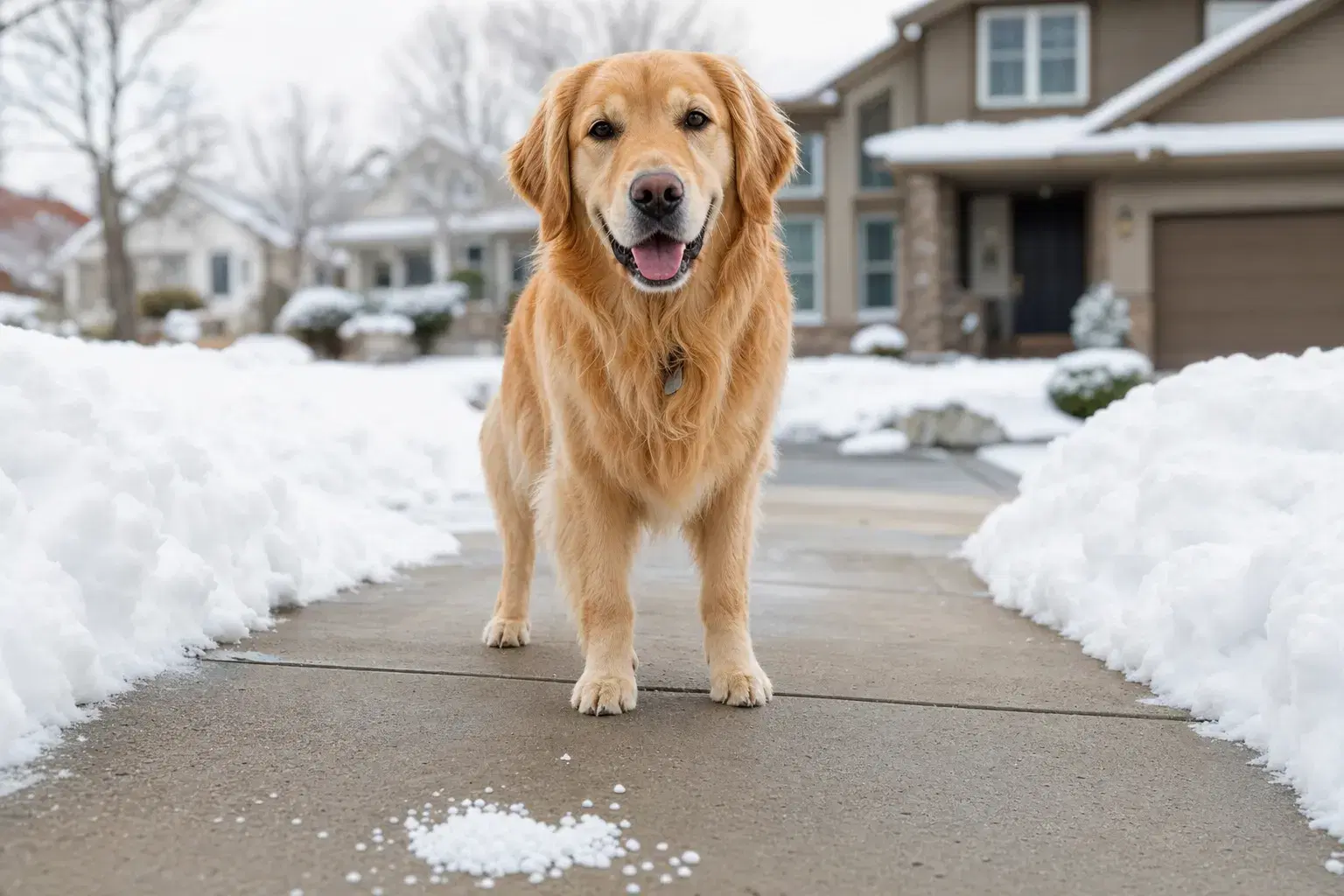
Why Ice Melt Matters for Pet Owners
Every winter, millions of homeowners reach for a bag of ice melt to keep their driveways and walkways safe. But if you have pets — especially dogs that walk across treated surfaces — the type of ice melt you choose could mean the difference between a safe winter and an emergency vet visit.
Traditional rock salt (sodium chloride) is the most common de-icer, but it's one of the harshest on pet paws. When dogs walk across salt-treated surfaces, the crystals can get lodged between their paw pads, causing irritation, cracking, and even chemical burns. Worse, pets that lick their paws after a walk can ingest these chemicals, leading to gastrointestinal issues.
Ingredients to Avoid
Sodium Chloride (Rock Salt): The most common and cheapest option, but also the most harmful. It can cause paw irritation and is toxic if ingested in large quantities.
Calcium Chloride: While effective at extremely low temperatures, calcium chloride generates significant heat as it dissolves, which can burn paw pads on contact.
Magnesium Chloride: Slightly safer than the others but still causes irritation in high concentrations. It's often marketed as "safer" but isn't truly pet-friendly.
What to Look For Instead
Urea-Based De-icers: Originally a fertilizer ingredient, urea is much gentler on paws. However, it's less effective below 15°F and can harm lawns if over-applied.
Propylene Glycol-Based Products: This is the same ingredient used in pet-safe antifreeze. It's significantly less toxic than ethylene glycol alternatives.
Sand or Kitty Litter: While not technically ice melt, these provide traction without chemical exposure. They're the safest option for households with very sensitive pets.
Products Labeled "Pet Safe" or "Paw Safe": Look for products with the Pet Safe certification. Brands like Safe Paw use a crystalline amide core with glycol mixture that's effective and gentle.
Best Practices for Pet Owners
- Wipe paws after every walk — Keep a towel and warm water by your door during winter months.
- Use pet boots — They provide a physical barrier between paws and treated surfaces.
- Apply ice melt sparingly — More product doesn't mean better results. Follow package directions.
- Store products securely — Keep bags of ice melt where curious pets can't reach them.
- Rinse your driveway in spring — Remove chemical residue once the season ends.
Don't risk your pets' safety with the wrong ice melt — let our snow removal pros handle your property with pet-safe products this winter.
Get Your Free QuoteNo obligation • Quick response within 24 hours
The Bottom Line
Choosing a pet-friendly ice melt is about reading labels carefully and understanding what you're putting on your property. The cheapest option isn't always the best — especially when your furry family members are walking across it daily.
If you're not sure which product is right for your property, or if you'd rather leave winter maintenance to the professionals, consider hiring a snow removal service that uses pet-safe products. Your pets (and their paws) will thank you.
Quick Comparison Chart
| Product Type | Pet Safety | Effectiveness | Cost |
|---|---|---|---|
| Rock Salt | ❌ Poor | ✅ High | 💲 Low |
| Calcium Chloride | ❌ Poor | ✅ Very High | 💲💲 Medium |
| Magnesium Chloride | ⚠️ Moderate | ✅ High | 💲💲 Medium |
| Urea-Based | ✅ Good | ⚠️ Moderate | 💲💲💲 High |
| Safe Paw / Pet-Safe Brands | ✅ Excellent | ✅ Good | 💲💲💲 High |
| Sand / Kitty Litter | ✅ Excellent | ⚠️ Traction Only | 💲 Low |
Remember: the safest driveway is one that's been properly plowed and treated by professionals who know which products to use and how to apply them correctly.